
Patents · October 19, 2026
How Much Does It Cost to Patent a Pharmaceutical Drug in Irvine, California?
The pharmaceutical patent cost for one U.S. drug patent typically ranges from about $15,000 to $60,000 or more through grant, combining attorney drafting and prosecution fees with USPTO fees, and maintenance fees add up to $14,470 at undiscounted rates. Foreign filings can multiply that total. Explore patent protection and our Irvine patent law services.
What Is the Typical Pharmaceutical Patent Cost for One U.S. Application?
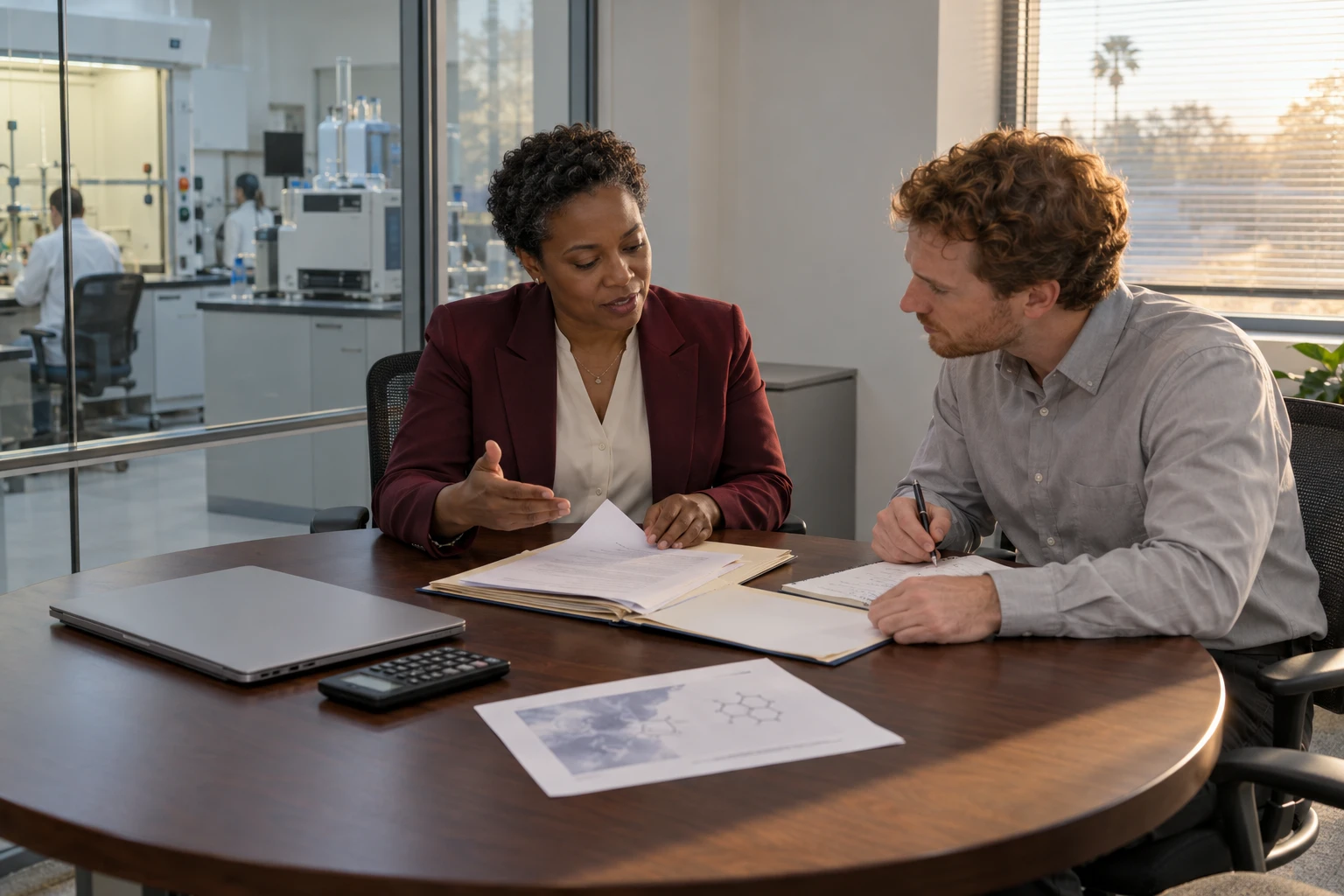
The typical pharmaceutical patent cost for one U.S. utility application ranges from about $15,000 to $60,000 or more from drafting through grant, based on national estimates. That range combines attorney fees for preparing a complex chemical or biologic application, several rounds of prosecution, and USPTO fees for filing, search, examination, and issue. Summaries of AIPLA survey data place attorney drafting charges for complex chemical and biotech applications at roughly $11,400 to $25,000 or more, and many published estimates put a typical granted U.S. patent at $30,000 to $60,000. Drug companies rarely stop at one patent. A product is often protected by a family of patents covering the compound, formulations, methods of use, and manufacturing. mjIP does not publish fees and discusses costs at a free consultation once the scope of the portfolio is clear.
What USPTO Fees Apply to Drug Patent Applications?
USPTO fees for a drug patent application begin at $2,000 for filing, search, and examination at the undiscounted rate, with 60 percent discounts for small entities and 80 percent discounts for micro entities. These fees come from the USPTO schedule effective January 19, 2025, last revised August 14, 2026. Pharmaceutical claims often cover many compounds, salts, dosage forms, and methods, so excess claim fees can add up quickly. Large companies and companies that license to them generally pay undiscounted rates. The most common fees for a drug application, shown at undiscounted rates, include the following. Fees change periodically, so confirm current amounts before each filing, and remember that discounts apply only when entity status is properly claimed and remains accurate.
- Basic filing fee $350, search fee $770, and examination fee $880
- Each independent claim over three: $600; each total claim over 20: $200
- Multiple dependent claim fee: $925
- Application size fee: $450 for each additional 50 sheets over 100
- Utility issue fee: $1,290
- Request for continued examination: $1,500 for the first request
How Much Do Attorneys Charge to Draft and Prosecute a Drug Patent?
Attorney fees are usually the largest part of a drug patent budget, with drafting alone often exceeding $11,000 and prosecution adding thousands more. A 2023 summary of the AIPLA Report of the Economic Survey (2021 edition) put the median charge to prepare a biotechnology or chemical application at about $11,400, and a 2026 industry summary placed relatively complex biotech or chemical utility applications at about $15,400. Each response to a rejection commonly costs $2,300 to $4,000 in attorney fees, and AIPLA-derived data report an average of 4.2 office actions per utility patent. Pharmaceutical applications frequently face obviousness rejections based on known compounds or formulations, so responses may require declarations with comparative data. Formulation and method-of-use filings raise similar issues, which we cover in our guide on protecting drug formulations and delivery methods.
What Do Maintenance Fees Add Over a Drug Patent’s Life?
Maintenance fees add $14,470 over the life of a U.S. patent at undiscounted rates, paid at 3.5, 7.5, and 11.5 years after grant. Under the current USPTO schedule, those payments are $2,150, $4,040, and $8,280, or a total of $5,788 for a small entity. Missing a payment can end the patent early, which can be costly for a marketed drug. A U.S. utility patent generally lasts 20 years from its earliest non-provisional filing date under 35 U.S.C. 154, and patent term adjustment can add time for certain USPTO delays. For drugs that spent years in FDA review, 35 U.S.C. 156 allows a patent term extension of up to five years, provided the remaining term after approval does not exceed 14 years. Our article on patent vs. FDA exclusivity explains how these timelines interact.
How Much Does Foreign Protection Add to a Pharmaceutical Patent?
Foreign protection can add more than the U.S. filing itself, because each country charges its own fees and often requires translations and local counsel. Most drug companies file a PCT international application within 12 months of the first filing to preserve options in many countries. Filing through the USPTO with the USPTO as searching authority currently costs a $285 transmittal fee, a $2,400 search fee, and an international filing fee of $1,542 for electronic filing of the first 30 pages, or about $4,200 undiscounted. National phase entry generally follows about 30 months from the priority date. One 2026 industry summary gave an illustrative estimate of $40,000 to $70,000 for one patent family covering the United States, Europe, and China. Companies targeting many markets should plan budgets years ahead.
Why Is Patent Cost Different From Drug Development Cost for California Companies?
Patent cost is a small fraction of drug development cost, which runs into the hundreds of millions or billions of dollars. A study published in JAMA in 2020 estimated a median research and development cost of about $985 million and an average of about $1.3 billion to bring a new drug to market, based on 63 products approved from 2009 to 2018. For California drug companies, that gap explains why investors focus on patent quality: a weak patent can expose a large investment to early competition. Patents also matter for FDA listing. Under 21 CFR 314.53, an NDA holder lists patents claiming the drug substance, drug product, or approved method of use in FDA’s Orange Book, while process, packaging, metabolite, and intermediate patents are not listed. Listed patents can support a 30-month stay against generic approval.
Where Can You Get Help With Pharmaceutical Patent Costs in Irvine, CA?
You can get help with pharmaceutical patent costs from mjIP, an intellectual property law firm in Irvine, CA, that has served pharmaceutical, biotech, and supplement companies since 2010. Founding attorney Mandana Jafarinejad, Esq., is a USPTO-registered patent attorney who previously worked in-house at a Fortune 500 pharmaceutical company in Orange County, which helps when planning portfolios around compounds, formulations, and methods of use. The firm serves Irvine, Orange County, San Diego, and the Bay Area. Learn about our Irvine patent law services, then contact us to schedule a free consultation where fees are discussed, or call (949) 833-7125. This article is general information, not legal advice, and reading it does not create an attorney-client relationship.
- Pharmaceutical Patent Attorney
- Drug Formulation Patents
- Patent vs. FDA Exclusivity
- Pharmaceutical Trademark Attorney
- Biotech Patent Attorney Cost
- Supplement Patent Cost
- Patent Attorney Cost
- Biotech Patent Eligibility
- Biotech IP Strategy Before Funding
- Provisional vs. Non-Provisional Patent Applications
- Patents FAQ
Common Questions
Frequently Asked Questions About Pharmaceutical Patent Cost in Irvine, CA
For most drug developers, yes. Patents can block competitors for up to 20 years from filing, support partnering and investment, and allow Orange Book listing that can delay generic approval. The cost is small compared with development spending. The right filing strategy depends on your product, markets, and timeline, which a consultation can help clarify.
A U.S. utility patent generally lasts 20 years from its earliest non-provisional filing date. Patent term adjustment can add time for USPTO delays, and 35 U.S.C. 156 allows up to five additional years for regulatory review, capped so that no more than 14 years remain after FDA approval. FDA exclusivities run separately.
Under the USPTO schedule effective January 19, 2025, filing, search, and examination fees total $2,000 for a large entity, $800 for a small entity, and $400 for a micro entity. Excess claims, multiple dependent claims, long specifications, and the issue fee add more, so totals vary by application. Fees change periodically, so confirm current amounts before each filing.
Possibly. Companies with 500 or fewer employees, including affiliates, can usually claim small entity status for a 60 percent discount, as long as they have not assigned or licensed the invention to a larger company. Licensing a drug to a large pharmaceutical partner usually ends eligibility for later fees, so status should be rechecked before each payment.
Under FDA regulations at 21 CFR 314.53, NDA holders list patents claiming the drug substance, the drug product such as a formulation or composition, and approved methods of use. Process, packaging, metabolite, and intermediate patents are not listed. Listing matters because it can trigger a 30-month stay when a generic challenger files a Paragraph IV certification.
No. A patent gives the right to exclude others from making, using, or selling an invention, while FDA approval allows a drug to be marketed. They are separate processes with separate costs. Patent budgets cover attorney and USPTO fees, while development and approval costs cover research, clinical trials, and FDA user fees.